
TL;DR
While there is no universally prescribed monolaurin dosage for Candida, practical intake principles emphasize starting low and increasing slowly. Most adults begin with a single 600mg capsule daily alongside a meal to assess digestive tolerance. Gradually increasing this intake over several weeks supports gut microbiome balance without overwhelming the digestive system.
Key Takeaways
- Monolaurin supports fungal balance by physically interacting with the cellular structures of target microorganisms in the digestive tract.
- A conservative “low and slow” titration schedule is the most effective way to avoid temporary gastrointestinal upset when introducing new lipid compounds.
- Consuming monolaurin alongside a meal that contains dietary fats improves overall absorption and significantly reduces the risk of mild nausea.
- Consistency in daily intake matters far more than achieving an arbitrarily high serving size.
Navigating Gut Health and Fungal Balance
Maintaining a balanced internal ecosystem requires managing populations of opportunistic microorganisms, the most common of which is Candida albicans. This naturally occurring yeast exists in the human gastrointestinal tract, mouth, and skin. Under normal conditions, beneficial bacteria keep Candida populations in check. However, when dietary shifts, stress, or external factors disrupt the gut microbiome, Candida can rapidly multiply, leading to an overgrowth that affects digestion, energy levels, and overall wellness.
Individuals seeking to support their body’s natural defense against fungal overgrowth frequently turn to targeted nutritional supplements. One of the most prominent compounds utilized for this purpose is monolaurin, an ester formed from glycerol and lauric acid. When evaluating the monolaurin antifungal benefits, the focus often shifts to how much to take.
Because dietary supplements function differently than pharmaceutical interventions, establishing a routine for monolaurin for candida is not about following a rigid, universal prescription. Instead, it requires a practical approach to supplementation. Finding the right intake level involves understanding how your body processes concentrated lipid compounds, establishing a baseline of tolerance, and building a consistent daily habit that supports long-term digestive harmony.

The Mechanism: How Monolaurin Interacts with Microorganisms
To understand why a measured intake strategy is necessary, it is helpful to examine how monolaurin operates at a microscopic level. Monolaurin, formally known as glycerol monolaurate, is a specific type of lipid (fat). Laboratory research indicates that this unique lipid possesses the ability to interact directly with the cellular architecture of certain microorganisms.
Many undesirable yeasts and bacteria, including Candida albicans, are surrounded by a lipid bilayer—a protective cellular membrane composed of fats. Because monolaurin is highly lipophilic (fat-soluble), evidence suggests it has an affinity for these membranes. When monolaurin comes into contact with susceptible microorganisms, it is believed to integrate itself into their protective lipid envelope.
This integration physically disrupts the structural integrity of the cell membrane, making it difficult for the organism to survive and replicate. Furthermore, Candida species are known for producing biofilms—thick, protective matrices that shield the yeast colonies from the body’s natural immune responses and from digestive enzymes. Emerging laboratory data indicates that monolaurin may interfere with the formation and stability of these biofilms, exposing the underlying yeast cells.
Because this physical mechanism relies on direct contact within the digestive tract, consistent daily exposure is critical. Introducing a massive amount of monolaurin all at once does not accelerate this process; it simply overwhelms the digestive system’s capacity to process fats, which is why structured intake principles are highly recommended.

Core Principles for Monolaurin Intake
Navigating monolaurin digestive health benefits requires prioritizing individual tolerance. Supplements are generally standardized, but human digestive systems are highly variable. The most successful supplement routines prioritize steady, incremental adjustments over aggressive starting points.
Assessing Initial Tolerance
Standard commercial monolaurin capsules typically contain 600mg of the active compound. For an adult introducing this supplement for the first time, taking a single 600mg capsule per day is the standard baseline. This initial phase is not about achieving a therapeutic maximum; it is strictly an assessment period.
During the first three to five days of use, the goal is to observe how the stomach and intestinal tract respond to the new lipid ester. Some individuals may experience mild shifts in digestion, which is a normal response when altering the gut microbiome environment. Maintaining a low initial intake ensures that any temporary digestive discomfort remains manageable.
Steady Titration for Digestive Comfort
Once initial tolerance is established, the intake can be gradually increased through a process called titration. The widely adopted “low and slow” method involves stepping up the intake in manageable increments.
After a week of successful tolerance at a single 600mg serving, an individual might add a second 600mg capsule at a different time of day, bringing the daily total to 1200mg. It is critical to separate these servings across different meals rather than combining them into a single dose. Spreading the intake out ensures a steady introduction of monolaurin to the gut microbiome over a 24-hour cycle, which maximizes the supportive benefits while minimizing the digestive burden on the liver and gallbladder.
If increasing the intake causes temporary bloating, fatigue, or mild stomach upset, it is a practical signal to step back down to the previous comfortable level for an additional week before attempting to increase again.

Choosing Between Capsules and Pellets
Monolaurin is widely available in two primary formats: traditional powder capsules and concentrated raw pellets. Capsules are precise, easy to integrate into an existing routine, and mask the naturally bitter taste of lauric acid extracts. Pellets offer an alternative for those who wish to avoid capsule casings, and they often come with a measured scoop. Regardless of the format chosen, the principle remains the same: quantify the starting amount (usually equivalent to one scoop or one capsule) and increase only when comfortable.
The Importance of Dietary Context and Timing
When optimizing monolaurin for gut health, the context in which the supplement is consumed is just as important as the amount taken. Because monolaurin is an isolated fat, consuming it on an empty stomach frequently leads to mild, transient nausea. This is a mechanical reality of digestion, not a sign of toxicity.
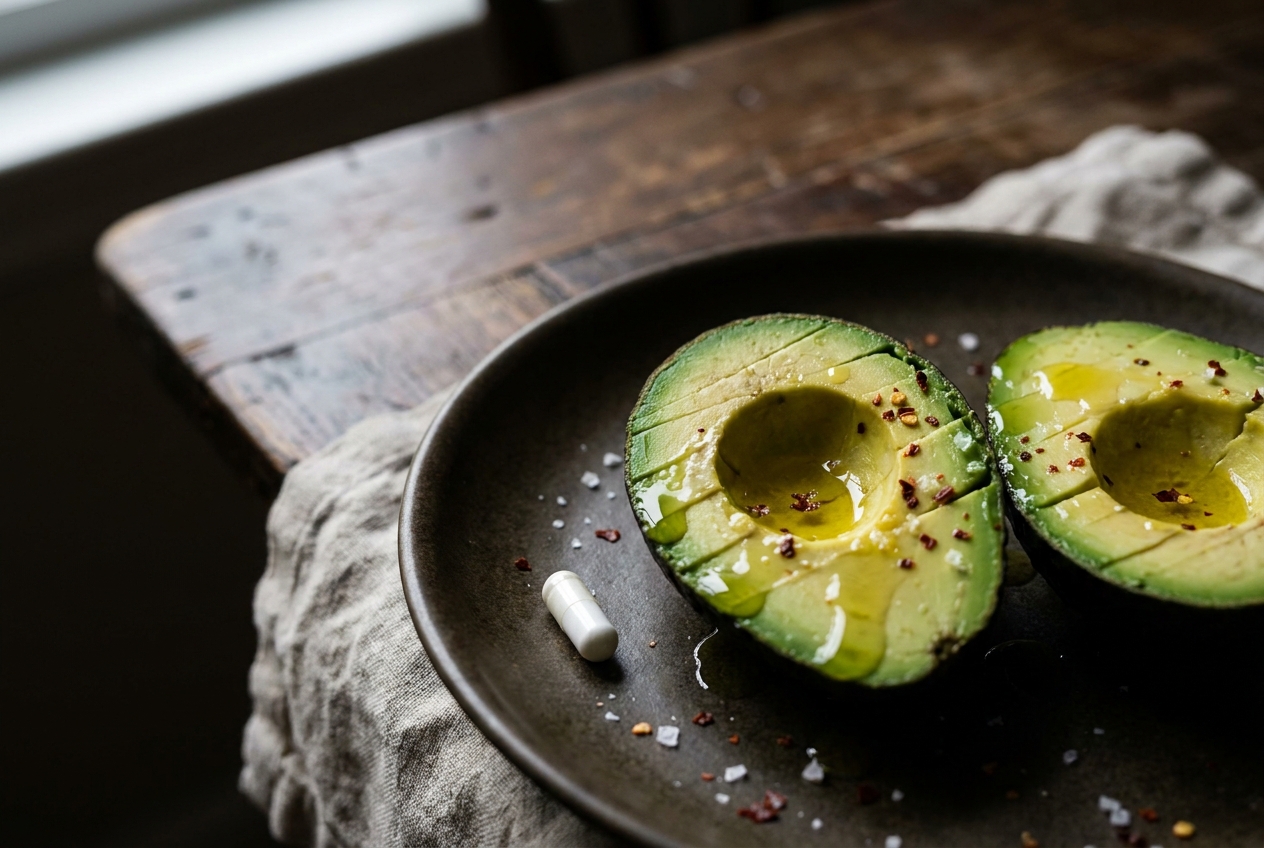
Taking monolaurin alongside a complete meal—particularly one containing natural dietary fats like avocados, olive oil, or nuts—triggers the gallbladder to release bile. Bile acids emulsify dietary fats, breaking them down into smaller, more easily absorbed particles. By introducing monolaurin into this active digestive environment, the body processes the supplement more efficiently alongside normal food.
Consistency in timing builds routine. Whether taking the supplement at breakfast and dinner, or lunch and a late snack, anchoring the intake to established daily meals is the most reliable way to ensure adherence.
Frequently Asked Questions
Should monolaurin for candida be taken with food?
Yes. Because monolaurin is a concentrated lipid extract, taking it on an empty stomach can lead to mild nausea or digestive discomfort. Consuming it alongside a meal, especially one containing dietary fats, stimulates bile production and greatly improves digestive tolerance.
How long does it take for monolaurin to impact gut health?
Individual responses vary based on diet, lifestyle, and the existing state of the gut microbiome. While some individuals notice shifts in their digestion within a few weeks, establishing long-term fungal balance typically requires consistent, daily supplementation over several months.
Can monolaurin replace prescription antifungal treatments?
No. Monolaurin is a dietary supplement designed to support the body’s natural immune and digestive systems, not a medication. It should be viewed as an ongoing tool for maintaining microbial balance rather than an acute medical treatment.
What is the difference between monolaurin and coconut oil for Candida?
While coconut oil contains lauric acid, the human body is highly inefficient at converting dietary lauric acid into the active ester, glycerol monolaurate. You would need to consume impractically large quantities of coconut oil to yield the exact amount of active monolaurin found in a single standardized supplement capsule.

Final Thoughts on Consistency
When exploring the benefits of monolaurin, the most reliable strategy is consistency over intensity. Trying to find the absolute maximum intake level often leads to digestive burnout and an abandoned routine. By prioritizing a conservative, steady titration process and anchoring the supplement to your daily meals, you allow your body the time it needs to utilize the compound effectively without experiencing unnecessary discomfort.
When evaluating supplements to support your routine, quality criteria matter immensely. Look for pure glycerol monolaurate that avoids unnecessary fillers or artificial binders. For a reliable, high-quality option that meets these neutral evaluation criteria, visit Shop Monolaurin to explore appropriate formats for your long-term gut health regimen.